People have been restaging battles for as long as they have been fighting them: from Roman arenas flooded for mock sea fights to 5,000 volunteers recreating Waterloo on its bicentenary in 2015. This piece traces that long line — the spectacles, the veterans who replayed their own war, the hobby that took shape in the 1960s, and the arguments it still provokes about authenticity and memory.
For Bloody Hopes the subject is personal. Reenactors and living historians are some of the most careful listeners these ballads have, and they ask the same question every song here asks: what does it mean to stand where they stood, knowing how it ended?
Before the Hobby: Spectacle and State Theatre (Rome to 1700)
The oldest ancestors of reenactment were public shows, not hobbies. Rome staged famous battles in its amphitheatres, including the naumachia, a mock naval engagement fought on flooded ground. Medieval tournaments sometimes dressed their combats in themes borrowed from antiquity.
England in the 17th century made the mock battle a regular entertainment. In 1674 Charles II had the previous year’s Siege of Maastricht rebuilt near Windsor Castle: an 80-yard-wide fortress with 12-foot walls and a moat, besieged by 700 serving soldiers over five days, with mines, raids and parleys. Crowds came out from London, the diarist Samuel Pepys among them.
These were royal and military displays. Their actors were real soldiers, and their purpose was prestige — the past as propaganda for the present.
The 19th Century: Romanticism and the Veterans (1820–1938)
The Romantic craze for the Middle Ages, fed by Walter Scott’s Ivanhoe, turned the past into something civilians wanted to wear. Recent wars became stage shows too: a Battle of Waterloo was performed at Astley’s Amphitheatre in London in 1824, nine years after the real one.
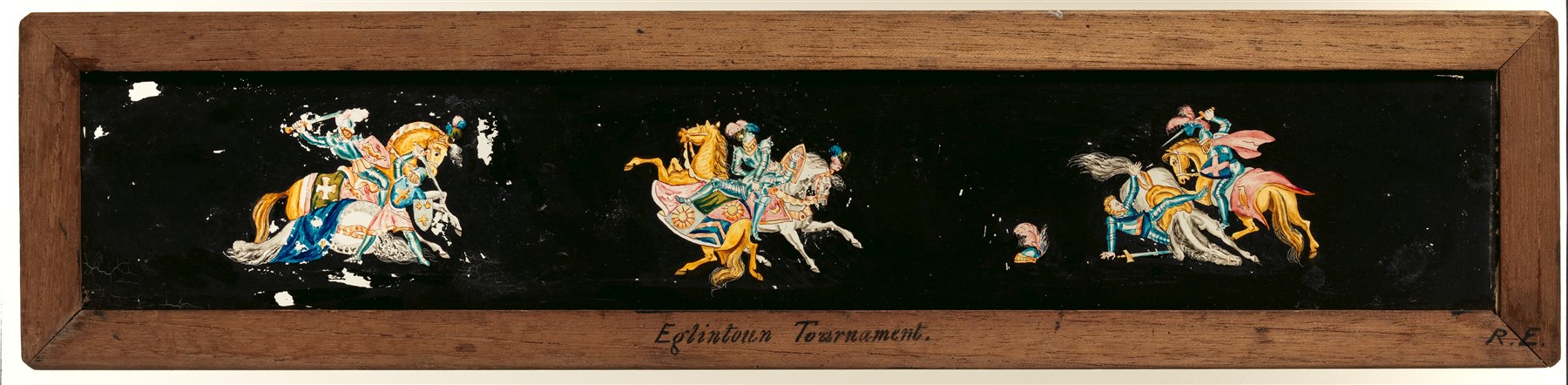
The watershed was the Eglinton Tournament of 28–30 August 1839, a medieval joust and revel staged by Archibald Montgomerie, 13th Earl of Eglinton, at his castle in Ayrshire. Around 100,000 spectators came. Eglinton cared about historical accuracy, but rain famously drowned much of the pageant, and the event was mocked as much as admired. National Museums Scotland calls it the first civilian, unofficial re-enactment in Britain — private people, not an army, recreating a past for its own sake.
Later in the century the people replaying battles were often the men who had fought them. Survivors of the 7th Cavalry posed their own defeat at the Little Bighorn for the camera within a year. In 1895 Gloucestershire volunteers restaged Rorke’s Drift at the Cheltenham Winter Gardens.
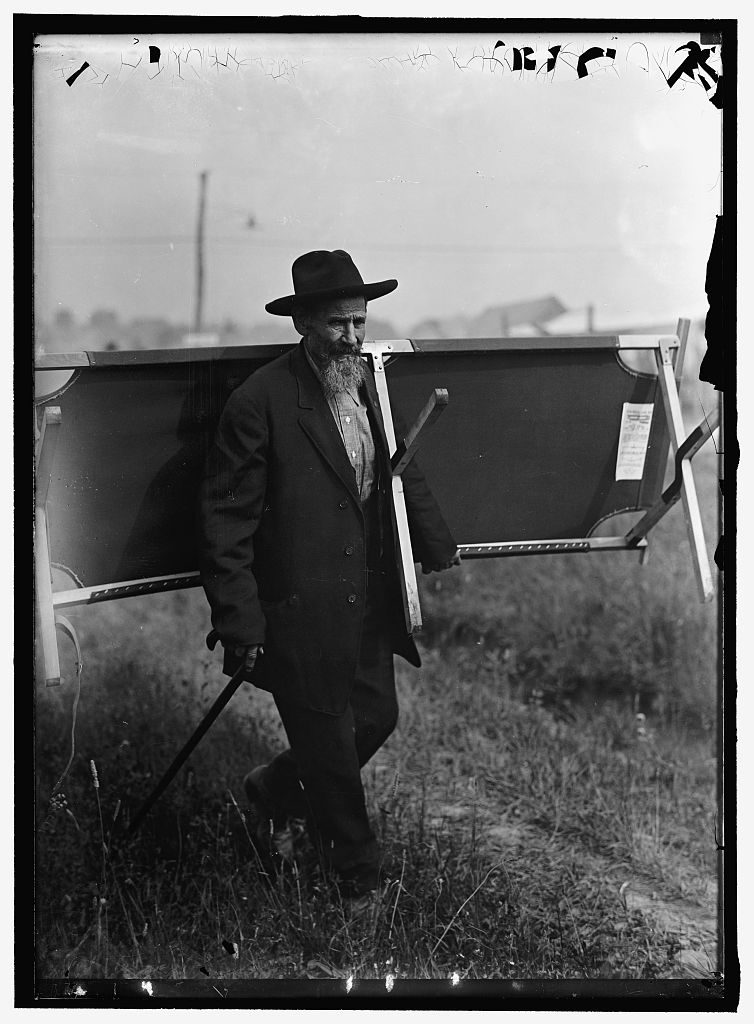
The great American example is Gettysburg 1913. For the 50th anniversary, 53,407 veterans were officially counted in a tent camp on the battlefield, from 29 June to 6 July. Survivors of Pickett’s Charge walked again toward the stone wall at the Angle, where men of the Philadelphia Brigade met them — with handshakes, not musketry. The theme was reconciliation, and it was heavily managed: the National Park Service notes that national unity was promoted at both the 1913 and 1938 reunions. In 1938, at the 75th anniversary, 1,845 veterans attended — 1,359 Union and 486 Confederate, averaging 94 years of age. Only a handful had fought at Gettysburg itself: counts range from 16 to about 25. It was the last time the men themselves could stand in for their own memory.
The 20th Century: From Pageant to Hobby (1920–1990s)
Between the wars, reenactment served states and armies. Imperial Russia had already restaged the Siege of Sevastopol (1906) and Borodino. In 1920 Petrograd restaged the Storming of the Winter Palace on its third anniversary, a mass spectacle that fed scenes in Eisenstein’s October. In Britain, the Royal Tournament and the Aldershot Tattoo made large set-piece battles a fixture of the 1920s and 1930s. In the United States, National Guard units, Marines and cadets began staging Civil War battles in the 1930s; at Manassas’s 75th anniversary in 1936, a thousand Marines played the Union army before some 40,000 spectators.
The modern hobby — amateurs who make their own kit and join units — was born in the 1960s.
- Manassas, July 1961. For the Civil War centennial, crowds of 45,000–55,000 a day watched on Henry House Hill on 21–23 July. Counts of the “troops” vary widely: the Georgia Encyclopedia gives about 2,200 participants, other accounts far more. Temperatures in the 90s °F caused heat collapses; a Union reenactor was hospitalised with buttons driven into his skin by a cannon blast. The park’s own historian judged it more celebration than commemoration of a tragedy, and critics read it against the civil rights struggle of that same summer. The National Park Service then barred battle reenactments on its land. Reenacting lore also dates the insult “farb” to this event.
- The Sealed Knot, 1968. In Britain, Brigadier Peter Young — a Second World War commando and head of military history at Sandhurst — founded the Sealed Knot in February 1968, after a costumed party to launch his book Edgehill 1642. By 1970 it was staging English Civil War battles, and it remains the oldest reenactment society in the UK.
- The boom, 1986–2000. More than 6,000 reenactors turned out for Manassas’s 125th anniversary in 1986, opening the hobby’s heyday. By 2000, American Civil War reenactors were estimated at about 50,000.
Napoleonic, medieval, Roman and Second World War groups followed across Europe and North America, many of them organised on the Sealed Knot model of regiments, musters and a seasonal calendar.
Living History, Museums and the Authenticity Wars
Reenactment grew alongside a quieter tradition: showing daily life rather than battle.
- Open-air museums. Artur Hazelius opened Skansen in Stockholm on 11 October 1891, inspired by King Oscar II’s open-air collection near Oslo (1881). Its houses were first furnished with costumed dolls, soon replaced by real people spinning and weaving — a “living museum”. Skansen became the model for American sites such as Colonial Williamsburg and Old Sturbridge Village.
- First-person interpretation. Plimoth Plantation (now Plimoth Patuxet), founded in 1947, built its reputation on costumed interpreters who speak as 1627 colonists. Scholars have since questioned the method, and Wampanoag interpreters at its Native homesite chose to speak in their own modern voices rather than role-play their ancestors.
- Experimental archaeology. At Butser Ancient Farm in Hampshire, founded in 1970 and run from 1972 by Peter Reynolds, Iron Age houses were rebuilt and crops grown to test archaeological theories. Here reconstruction became a research method, not a performance.
Inside the hobby, the long argument is about authenticity. Reenactors sort themselves roughly into three camps:
| Label | Approach |
|---|---|
| Farbs | Little time or money spent on accuracy; the word’s origin is disputed |
| Mainstream | Real effort at accuracy, relaxed when no public is watching |
| Progressives / hardcores | Period stitching, rations and immersion, sometimes mocked as “stitch counters” |
The debate is less trivial than it looks. Every stitch counted is a claim about what the past was really like — and a reminder of what no costume can reproduce: hunger, disease, fear and death.
Reenactment Today: Europe Grows, America Contracts
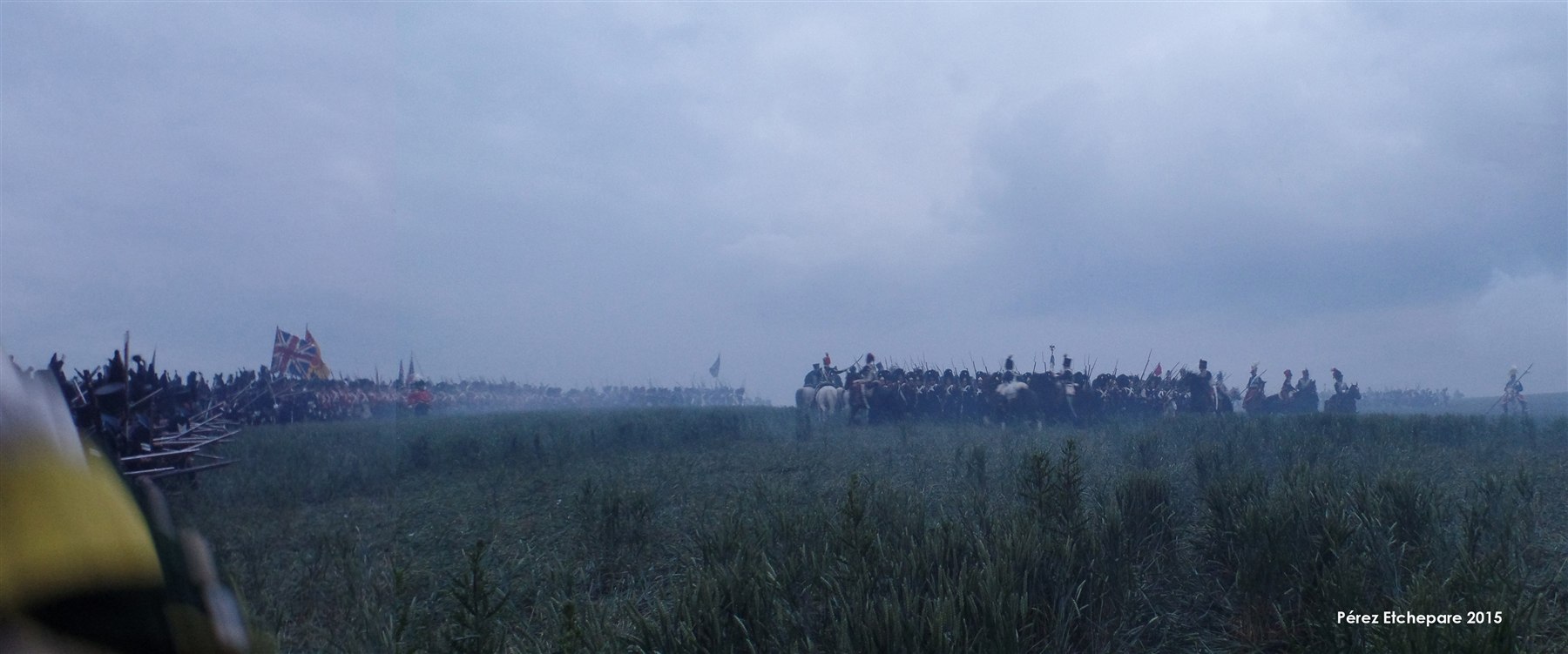
The largest modern events are European. Waterloo is reenacted every June on the original field, usually with 600–800 participants and 1,500–2,000 on five-year anniversaries. The 2015 bicentenary was in another class: about 5,000 reenactors, 300 horses and 100 cannon over two days, watched by some 60,000 spectators. The “armies” came from dozens of countries, a pan-European cast recreating the battle that once divided them.
Italy has its own circuit. Spinetta Marengo, outside Alessandria, restages Napoleon’s victory of 14 June 1800 each June, drawing reenactors from across Europe around the Marengo Museum. Events there have also brought forward figures battle scripts usually leave out, such as the vivandières and cantinières who fed and nursed the troops.
In the United States the trend runs the other way. Civil War reenactors, about 50,000 in 2000, were estimated at 30,000 by 2011. In 2019 the Gettysburg Anniversary Committee, which had run the town’s largest annual reenactment for 25 years, cancelled its 2020 event, citing an ageing hobby. Since then, the public argument over Confederate symbols has pushed some events off their land and left many reenactors uneasy about how they are seen. The 1990s boom, its veterans admit, is not coming back.
Reenactors themselves report a split: the big mainstream events have shrunk most, while smaller, research-driven “authentic” groups are holding steadier.
What Reenactment Is For
The thread through four centuries is that every reenactment says something about its own present. Charles II’s siege flattered a dynasty. Eglinton dreamed of chivalry in an industrial age. Gettysburg in 1913 staged reconciliation between white veterans while leaving out the war’s cause. Manassas in 1961 turned a defeat into a picnic in the same summer as the Freedom Rides.
The best reenactors know this, and that is why their obsession with detail matters. A correct button or ration is a small refusal to let the past become a costume party. But the field always ends the same way: the dead get up, and everyone goes home.
That gap is where these ballads live. A song cannot make anyone stand in the line at the Angle. What it can do is keep the cost in view — the names, the letters home, the mourning in towns far from the field — so that the handshake at the wall does not become the whole story.
Sources and Further Reading
- Historical reenactment, Wikipedia (overview; Maastricht 1674; Astley’s 1824; Russian reenactments; Winter Palace 1920; Manassas 1986; terminology).
- Eglinton Tournament, Wikipedia; The Eglinton Tournament, National Museums Scotland; “The lavish Scottish revival in jousting”, The Scotsman.
- “Gettysburg at 50: The Great Reunion of 1913”, Mental Floss; “Opposing Civil War Veterans Met in Peace”, Military.com.
- National Park Service, “1938 Reunion Then and Now”; National Archives, “Gettysburg’s 75th Anniversary”, Prologue, 1992; “Gettysburg’s Last Reunion”, The Gettysburg Experience; 1938 Gettysburg reunion, Wikipedia.
- American Battlefield Trust, “The Centennial Reenactment of First Manassas”; National Park Service, Manassas administrative history, “Reenacting the Past”, and “The Manassas Centennial”; Project MUSE article summary on the 1961 reenactment.
- “Civil War Reenacting”, New Georgia Encyclopedia; “Army & Navy at Manassas”, Time, 1936.
- Peter Young (historian) and The Sealed Knot, Wikipedia; “What is the Sealed Knot?”, British Heritage.
- “Our history”, Skansen; Artur Hazelius, Wikipedia; “Artur Hazelius”, Linda Hall Library.
- Plimoth Patuxet, Wikipedia; Scott Magelssen, “Recreation and Re-Creation: On-Site Historical Reenactment as Historiographic Operation at Plimoth Plantation”, Journal of Dramatic Theory and Criticism, 2002.
- Butser Ancient Farm, Wikipedia; Maureen Page, “Butser Ancient Farm”, EXARC Journal, 2012.
- Battle of Waterloo reenactment, Wikipedia; “At Waterloo Re-enactment, History So Real You Can Taste It”, NPR/KPBS, 2015; “An insider’s view of the battle of Waterloo”, The World, 2015.
- Marengo Museum, Il Piccolo, 2024; project on vivandiere and cantiniere at the Marengo reenactment, Consiglio regionale del Piemonte.
- American Civil War reenactment, Wikipedia; “Fewer People Participate in Civil War Reenactments”, NPR, 2011; “Civil War reenactment organization says no event next year”, WITF, 2019.
- “Reenactors’ brave new world”, HistoryNet; “Reinventing Civil War Reenactment”, Hobble Creek, 2021; “Reenactment numbers”, CivilWarTalk forum (practitioners’ own accounts).
Some figures in this article vary between sources; where they do, the range is given. Last reviewed November 24, 2026. Corrections and archival leads are welcome through email.
← Browse every historical article · Hear the Gettysburg ballad →