Bred for Battle
Every cavalry doctrine rested on an animal with its own lungs, fear, memory and limits. Before the charge came breeding; before formation came balance; behind every famous rider stood breeders, grooms, farriers, veterinary surgeons—and a horse trained to trust the impossible.
Research and editorial review: Re Fagiano · Last revised September 1, 2026
Simon de Pas after Antoine de Pluvinel, riding-school scene, 1623 · Statens Museum for Kunst · Public domain
1. The Horse Was Never a Machine
A cavalryman could not merely point his mount at danger. The horse is a herd-living prey animal whose survival depends on detecting movement and escaping threats. Military horsemanship worked by redirecting those instincts rather than erasing them. Familiar companions made the herd into a squadron; repetition made noise predictable; the rider’s seat, legs and reins turned anxiety into an understood task.
The result was not fearlessness. Period manuals repeatedly prize a horse that is obedient, free, forward and manageable. A good troop horse could remain responsive while excited, recover after exertion and accept pressure from horses on both sides. An animal might tolerate musketry yet refuse mud, pass artillery yet panic when separated from its stable companion. Training created probabilities, never certainty.
- Temperament was tactical. Too dull a horse lacked forward impulse; too reactive a horse exhausted itself and disturbed its neighbours. Armies wanted energy under control.
- Fitness was specific. Parade condition did not equal campaign condition. Long walking marches, intermittent fast work, poor sleep and irregular feeding demanded a durable metabolism and gradual hardening.
- Pain broke formations. A badly fitted saddle, sore back, damaged mouth or loose shoe could make an otherwise trained horse resist, rear, shorten stride or fall out of line.
- Trust ran both ways. Riders who groomed and fed their own horses learned small changes in appetite, heat, legs and behaviour before these became military failures.
2. Building the Mounted Platform: Saddle, Bridle and Stirrup
Humans rode before they possessed a modern saddle, and cavalry fought before it possessed stirrups. The mounted military system emerged by accumulation: pads protected horse and rider; girths kept them in place; breast straps and cruppers limited sliding; increasingly rigid saddle trees distributed weight; bridles communicated direction and speed; stirrups later added a dependable foothold. No single invention created cavalry.
From pad to saddle tree
Early riders used blankets, pads and soft saddles secured around the horse’s barrel. These improved grip and reduced rubbing but concentrated the rider’s weight near the spine. The decisive structural development was the saddle tree: a frame, commonly of wood, that bridged the spine and distributed pressure along the stronger muscles and ribs on either side. Front and rear arches—the ancestors of pommel and cantle—also stabilised the rider during acceleration, turns and contact.
Archaeological discoveries from the Mongolian Altai show sophisticated framed saddles in the centuries around the beginning of the Common Era and strengthen the case for the eastern steppe as a major centre of development. Saddle forms did not diffuse unchanged. Horse archers generally needed freedom to rotate and shoot, while shock and melee riders benefited from higher, more enclosing fronts and backs. Medieval and Renaissance war saddles could hold the rider securely without functioning as a rigid clamp; security still depended on balance.
Bridle and bit: communication before leverage
A bridle is the headgear that carries reins and, usually, a bit. Bitless control is ancient, and not every culture relied on metal in the mouth, but archaeological bits demonstrate very early attempts to make rein pressure precise. The simplest snaffle acts mainly by direct pressure; curb forms add shanks and a curb strap or chain, creating leverage. Cheekpieces can stabilise the mouthpiece and help lateral signals.
Military requirements encouraged control with one hand, because the other might carry shield, lance, sword or firearm. This favoured equipment and schooling that made small rein signals meaningful. Yet severity was not the same as control. A powerful bit on an uneducated or frightened horse could produce pain, a raised head, resistance or flight. Renaissance pages filled with elaborate mouthpieces are evidence of experimentation—and sometimes coercion—not a catalogue of automatic improvements.
The stirrup arrives late
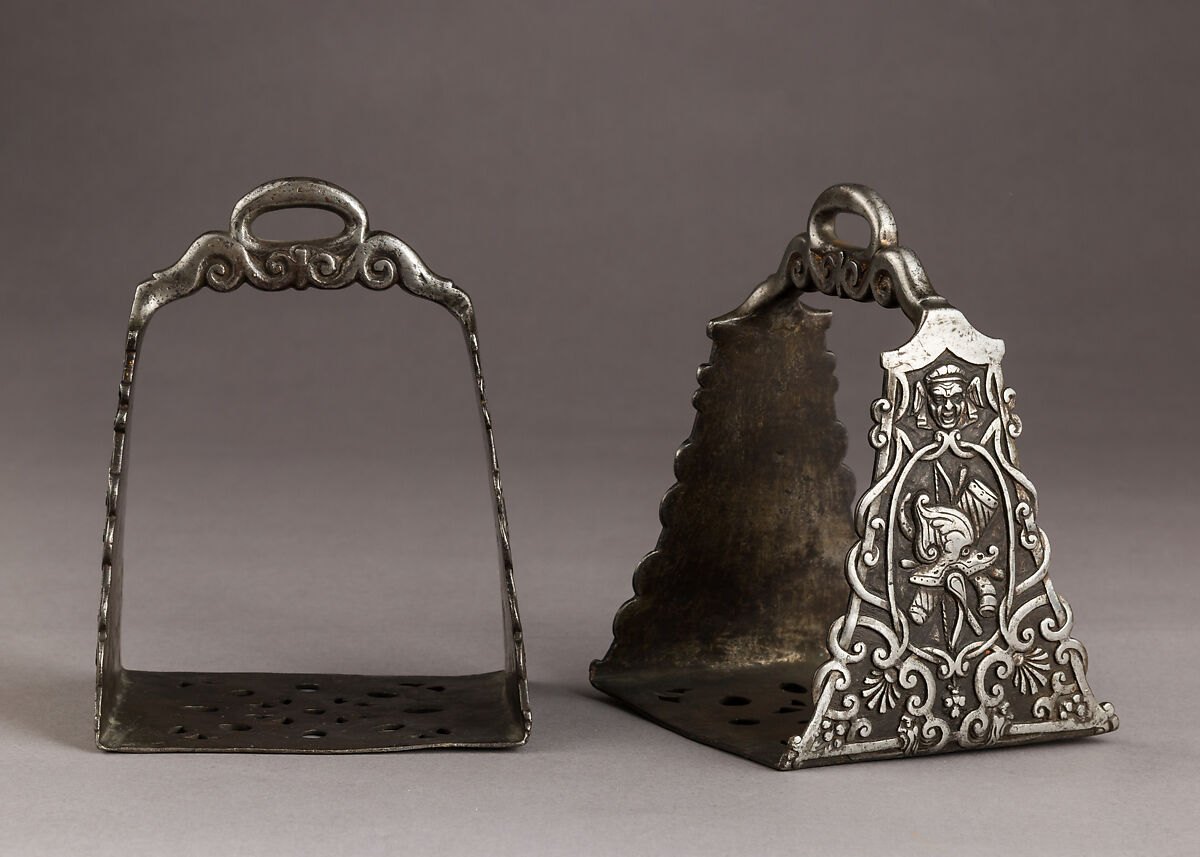
Toe loops and mounting aids preceded paired weight-bearing stirrups. The strongest archaeological sequence places recognisable paired stirrups in north-eastern China and Korea by the fourth century AD, with wooden, plated and then iron forms spreading through Inner Asia. They reached Europe unevenly around the sixth to eighth centuries.
Stirrups improved mounting, lateral stability, weapon handling and the rider’s ability to recover after being displaced. Standing briefly in them could absorb movement or free the seat; bracing against them helped resist an opponent. But they did not allow a rider to ignore balance or transmit unlimited lance impact through the horse. Ancient cavalry without stirrups already charged, threw weapons and fought in close combat using developed saddles and trained seats.
The “stirrup created feudalism” problem
Lynn White Jr.’s influential 1962 thesis argued that the stirrup enabled a new kind of mounted shock warrior and therefore helped produce the landholding structures called feudalism. The claim was elegant, memorable and too mechanical. Later historians challenged its chronology, its reading of Frankish warfare and the idea that one device could generate a social order. Current interpretations treat the stirrup as an important part of a system that also included saddle design, horse supply, weapons, training, wealth and political institutions.
The better conclusion is cumulative: the tree protected the horse and stabilised the load; pommel and cantle secured the rider; bridle and bit refined communication; stirrups added support. Together they expanded what mounted troops could do. None worked independently of the animal beneath them.
3. The Medieval Warhorse: Selected, Not Simply Enlarged
The cinematic “great horse” is usually imagined as a modern heavy draught animal. Archaeology gives a subtler picture. A large 2022 zooarchaeological study of English horses from AD 300–1650 found that medieval animals were commonly below the modern 14.2-hand boundary between pony and horse. Exceptional tall animals existed, particularly by the later Middle Ages, but size alone cannot identify a warhorse.
Medieval vocabulary described functions and qualities more readily than modern closed breeds. The destrier was a prized fighting mount; the courser suggested speed and quality; the rouncey was a more general riding and service animal; palfreys were valued for comfortable travel. These were markets and use categories, not stud-book breeds with fixed standards.
- Conformation carried weight. A compact back, strong loin, sound limbs and good hooves mattered more than height. Armour was distributed over the rider’s body, while a well-designed war saddle spread load and stabilised the seat.
- Agility mattered. A horse needed to start, stop, turn and remain balanced under an armed rider. Mass without coordination was a liability in melee or broken ground.
- Royal studs selected scarcity. English crown studs such as Odiham managed valuable animals and imported bloodstock. Elite breeders sought particular traits long before genetics supplied a vocabulary for inheritance.
- Several horses supported one warrior. A wealthy mounted combatant might preserve his best horse for battle and use other animals for travel, baggage or servants. The campaign system, not a lone destrier, delivered him to the field.
4. From Battlefield Seat to the Riding School
Renaissance riding academies did not invent control of the warhorse, but they systematised and advertised it. Italian masters—Federico Grisone at Naples among the most influential—treated the horse’s balance, mouth, turns and “airs” as subjects for written analysis. French and northern European courts then adapted the Italian tradition.
Some high-school movements had plausible martial ancestors: collecting the horse put weight onto the hindquarters for rapid changes of direction; lateral work improved control of shoulders and haunches; controlled turns helped a rider present a weapon or escape pressure. It is hazardous, however, to turn every spectacular air above the ground into a battlefield technique. Court display, individual combat, rider education and military utility overlapped without being identical.
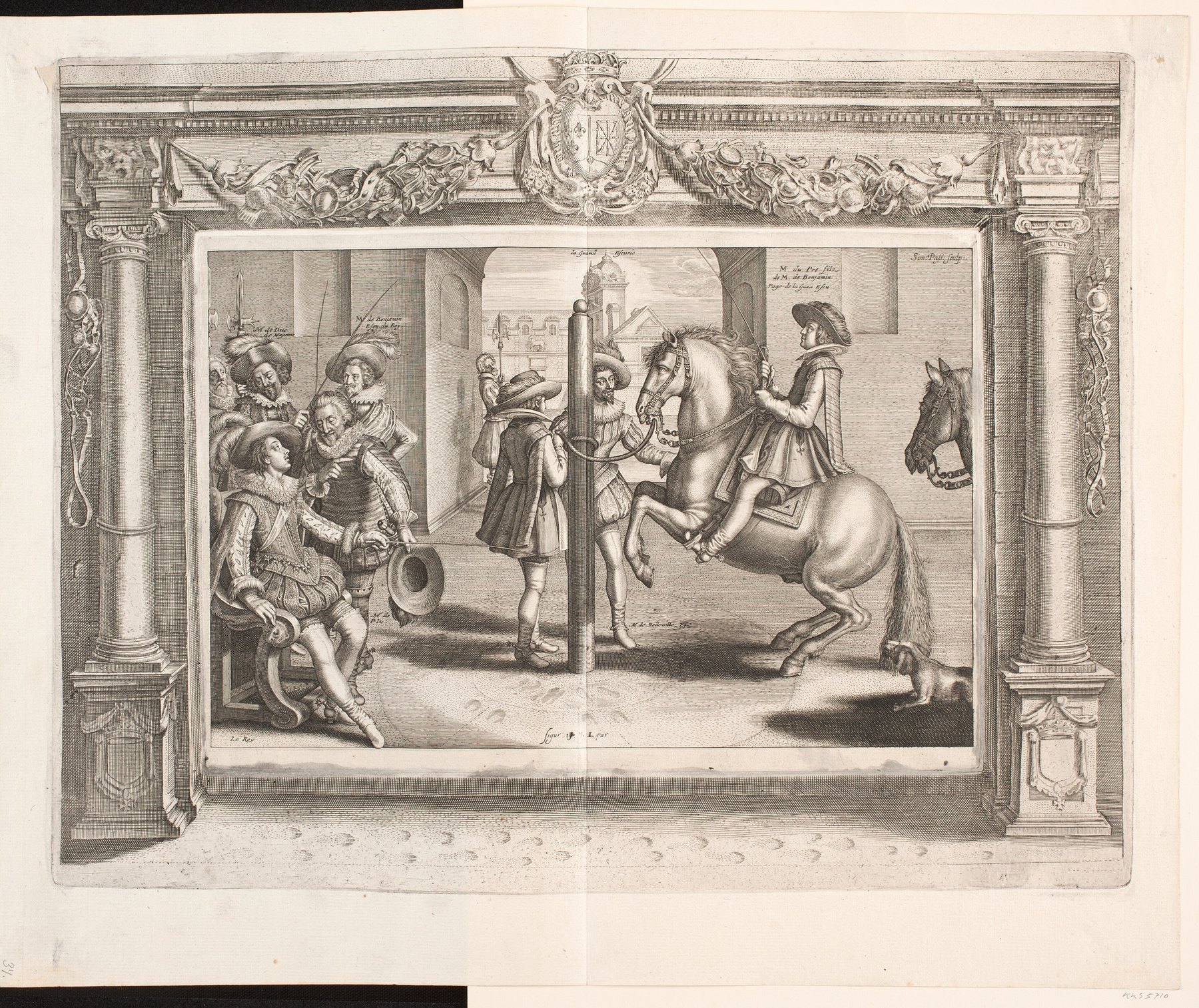
Methods also reveal changing ideas about force. Grisone’s text contains severe corrections that modern readers rightly find disturbing. Pluvinel’s teaching is often presented as more patient and progressive, seeking willing obedience through graded work. William Cavendish argued with predecessors while insisting on his own system. None maps neatly onto modern welfare standards, but together they show trainers wrestling with the same permanent problem: compulsion can produce a movement quickly while destroying confidence, soundness or reliability.
5. A Different Horse for Every Military Job
“Cavalry horse” was never one specification. Armies matched available horse populations to tactical roles, then compromised when war consumed the preferred type.
Colour and appearance sometimes helped regimental identity—famous grey regiments are an obvious example—but remount crises dissolved aesthetic consistency. A commander short of horses accepted sound animals before matching ones. Tactical labels also drifted: many eighteenth-century dragoons fought as ordinary cavalry, so their mounts increasingly resembled other line cavalry.
6. Breeding Regions, Imported Blood and the Rise of the State Stud
Military breeding was an argument between specialisation and supply. Iberian horses were prized in early modern courts for balance, presence and manageability. Neapolitan and other Italian schools shaped elite horsemanship. Arabian, Barb and Turkoman horses influenced European saddle stock through imports whose reputations sometimes exceeded their numbers. Hungarian, Polish, Ukrainian and Russian breeding landscapes supplied tough cavalry horses shaped by extensive grazing and long movement. Britain combined native riding and harness types with the developing Thoroughbred, while Ireland became famous for hunters and remounts.
These influences were not a simple ladder of “better blood.” A fast Thoroughbred could add speed and quality but also produce animals too light, excitable or nutritionally demanding for a particular service. An admired desert horse might endure heat yet lack the size sought for heavy cavalry. Crossbreeding only worked when selection continued for the intended job.
- Royal prestige became state capacity. Crown studs that once supplied courts evolved into national systems concerned with agriculture, transport and war. France’s royal studs were reorganised repeatedly; Napoleon restored a state framework because armies could not improvise mature horses.
- Stallions multiplied influence. Governments could place selected stallions among civilian breeders rather than feed a complete military herd in peacetime. The resulting foals remained in the civilian economy until purchase.
- Mares were the hidden reserve. Export, agricultural depression or wartime requisition of good mares damaged future supply years later. Parliamentary debate after the South African War exposed Britain’s anxiety that quality existed but quantity did not.
- Stud books made ancestry legible. Pedigree registration supported more systematic selection, but military inspectors still bought the animal in front of them: feet, wind, eyes, age, action and temperament could not be replaced by a famous name.
7. Training a Horse for Noise, Pressure and Violence
No single ritual made a horse “battle-proof.” Military schools used progressive habituation: first secure basic responses, then add disturbance without exceeding the animal’s ability to learn. Horses could be exposed to drums, trumpet calls, waving cloth, moving weapons, smoke and gunfire at increasing proximity. They learned to pass objects, stand while others moved away, tolerate sabres above their ears and keep direction when the rider’s hands were occupied.
- Start with the aids. Forward, halt, rein back, turn and yield to leg pressure had to remain available under excitement. Without this vocabulary, noise training produced endurance rather than control.
- Use experienced horses. Remounts placed among steady veterans could borrow calm from the herd. A frightened animal among other frightened animals produced the opposite lesson.
- Train the rider’s body. A nervous rider grips, shortens the reins and communicates alarm. Military equitation therefore trained balance without dependence on the hands, weapon use from the saddle, mounting quickly and recovering lost order.
- Repeat, but do not numb. Fatigue can resemble obedience. A horse exhausted into passivity is unreliable when rested and physically less capable on campaign.
- Do not confuse aggression with usefulness. Sources offer occasional stories of horses biting or striking, but the institutional requirement was governability. A horse that attacked indiscriminately endangered friendly ranks and handlers.
The trained warhorse was not taught to stop being afraid. It was taught that the rider’s answer mattered more than the first alarm.
8. How Horses Held a Formation
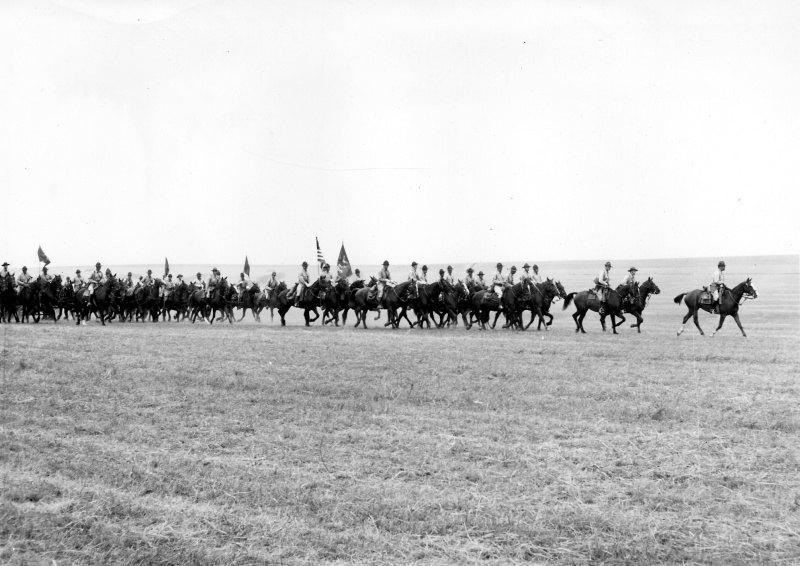
A cavalry formation was a moving negotiation of intervals. Horses vary in stride length, speed, crookedness and willingness to approach another animal. Riders had to regulate those differences while preserving direction and enough space for weapons. “Knee to knee” described cohesion and intent, not a permanent crushing contact at every pace.
Drill built formations from manageable pieces. A recruit first controlled one horse; files, ranks, sections and squadrons then practised walking turns before adding trot, gallop and weapons. Markers, guides and officers fixed direction. The pace often began controlled so alignment survived; acceleration was reserved for the approach to the target. Charging too far at full speed blew horses, stretched the line and delivered individuals instead of a unit.
- Dress on a guide. Riders aligned to a chosen flank or centre rather than independently chasing the man ahead.
- Preserve the reserve. Second lines exploited success, met enemy cavalry or allowed a first line to rally. Depth was organisational insurance.
- Match horses within sub-units. Similar stride and speed reduced constant checking and surging. Perfect matching was aspirational; sensible assignment was practical.
- Rally was part of the charge. A formation that could strike once and not reform was an expended weapon. Trumpet calls and predetermined rally points turned scattered riders back into tactical mass.
- Terrain chose the geometry. Close order belonged to open ground. Defiles, woods, fences, mud and villages required column, dispersed files or dismounted action.
9. Campaign Tack, Shoes—and the Question of Blinkers
Tack translated two bodies into one system. The military saddle had to stabilise rider and baggage, distribute pressure over long marches, clear the spine and survive hard use. Designs changed with riding doctrine and national tradition, but every design failed when incorrectly fitted. Saddle sores removed enormous numbers of horses from service without a shot being fired.
Bits offered leverage and precision but could not manufacture education. Renaissance collections display an extraordinary variety of mouthpieces, some severe. Later military systems commonly paired a curb with other options or taught riders to use reins in prescribed ways. Greater leverage magnified bad hands as efficiently as good ones.
- Shoes were operational consumables. Roads, stones and long marches wore iron rapidly. Farriers travelled with units because a lost or poorly fitted shoe could lame a horse before battle.
- Breastplates and cruppers managed slopes. They helped prevent the saddle sliding backward or forward, especially with loads and difficult terrain.
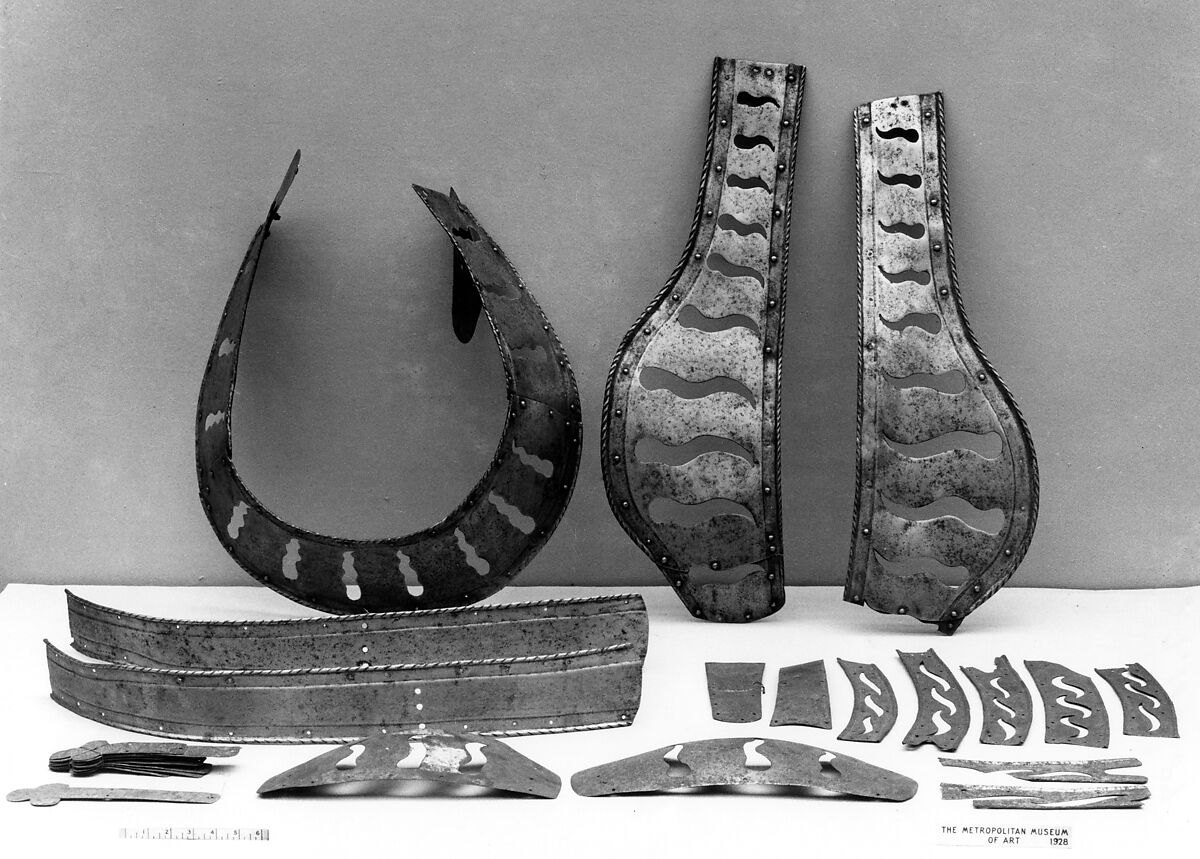
- Horse armour protected selectively. Shaffrons, crinets, peytrals, flanchards and cruppers could protect an elite mount, but full bards added weight, cost and maintenance. They were never universal cavalry equipment.
- Blinkers belong mainly to harness. Side-limiting blinkers helped many carriage and artillery horses ignore the moving vehicle, adjacent team and commotion behind them. Cavalry saddle horses generally benefited from wider vision for footing, neighbouring riders and threats. Images of eye-covered armoured shaffrons should not be mistaken for universal blindfolding; openings and designs varied, and deliberately removing a riding horse’s vision would create new dangers.
10. Horse Artillery: Formation Under Draught
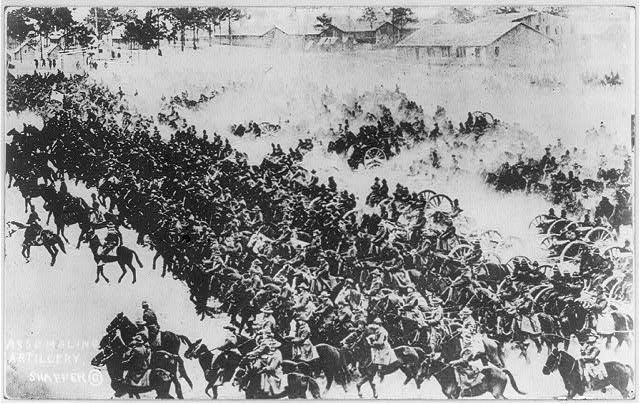
A gun team posed a different control problem from a cavalry rank. Several horses, harnessed in pairs, had to start together, keep traces taut, turn a limber and gun without cutting corners, brake on descents and tolerate the report of the weapon they delivered. Drivers controlled particular pairs; trained teams and correct harness converted separate efforts into traction.
Wheel horses nearest the vehicle needed strength and steadiness; lead horses helped set direction and pace. A spectacular but mismatched animal could unbalance the team. Casualties also created a cruel arithmetic: losing one horse might immobilise a gun unless teams were reorganised under fire. Artillery demanded reserves of harness, spare animals, drivers, farriers and forage far beyond the visible gun crew.
11. The Campaign Was Won in the Stable Line
Horses eat whether an army advances or sleeps. They require bulk, not merely calories: grass, hay or other roughage plus grain according to work and local practice. A military horse could consume roughly an order of magnitude more food by weight than a soldier. Fodder therefore filled roads, ships and railway wagons that popular battle maps leave empty.
- Water governed the march. Thousands of animals could empty or foul small sources. Watering a column without delay, crowding or disease required route planning.
- Condition could not be purchased instantly. A fresh civilian horse might be sound yet unfit for saddle weight, military feed, bivouac and repeated long marches.
- Disease travelled with concentration. Glanders, strangles, respiratory disease and mange flourished in depots, ships and crowded lines. Quarantine and inspection were strategic measures.
- Grooming was diagnosis. Cleaning removed sweat and mud, prevented rubbing and forced a daily examination of skin, back, legs and feet.
- Exposure killed. Heat, cold, mud, hunger and exhaustion often killed more animals than enemy action. The National Army Museum estimates that 75 per cent of British military horses that died in the First World War succumbed to disease or exhaustion.
12. Remounts: Why a Dead Horse Was Harder to Replace Than a Soldier
“Remount” meant both a replacement horse and the system that found, inspected, conditioned and distributed it. At small scale, regiments and officers bought locally. Mass armies required purchasing commissions, depots, veterinary certificates, brands, transport ships and classification by job.
Napoleon’s Russian campaign demonstrated that horse losses could cripple future operations. Hunger, exhaustion, disease and cold destroyed trained teams and cavalry mounts on a scale that could not be repaired by conscription. France could raise young men for 1813 faster than it could acquire mature, conditioned horses and teach new riders to use them together. Russian access to extensive breeding regions and administrative mobilisation of horseflesh became strategic power.
The American Civil War created enormous purchasing systems. Inspectors sought animals of appropriate age, height, soundness and disposition, yet fraud, hurried procurement, disease and inexperienced riders consumed remounts rapidly. The horse population looked vast on paper; the supply of sound, trained animals at the correct place was not.
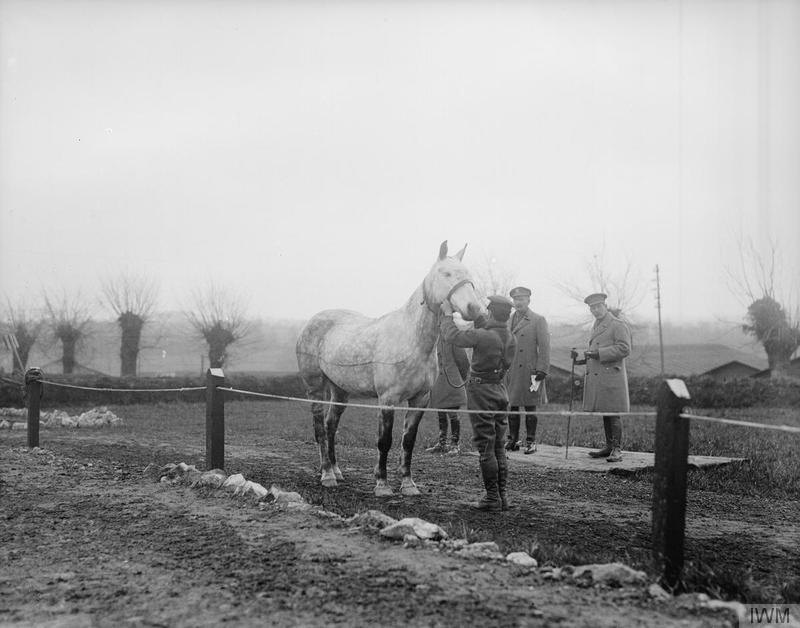
Britain created its central Remount Department in 1887. It entered the First World War with about 25,000 horses and bought hundreds of thousands more, including over 600,000 horses and mules shipped from North America. The system classified animals for riding, gun teams or transport, allowed recovery after ocean voyages, screened disease and sent replacements forward. This was equine industrial mobilisation.
13. What Mechanisation Replaced—and What It Kept
The internal-combustion engine did not simply outperform a galloping horse. It escaped biology: vehicles did not need years to mature, did not infect one another with glanders, and could be stored without daily fodder. Yet early vehicles demanded fuel, roads, spare parts and specialist mechanics. Armies mechanised unevenly because horse power remained flexible, locally available and familiar.
By the Second World War, some armies were heavily motorised while others still moved most artillery and supply by animal traction. Mounted units also survived in terrain or economies hostile to vehicles. The decisive change was not a universal date when horses became useless; it was the point at which industrial states could provide a more scalable mobility system.
The inheritance remains visible. Dressage preserves the disciplined control cultivated in military schools. Eventing descends from tests of the complete officer’s horse: obedience, cross-country endurance and jumping. Mounted police still school horses to crowds, banners, noise and contact using the old principle of gradual, controlled exposure. Even armoured “cavalry” retains the language of reconnaissance, screening and exploitation.
14. Seven Conclusions from the Horse’s Side of Cavalry History
- Breeds did not determine tactics by themselves. Armies selected from regional populations, crossed types, classified individuals and accepted compromises under wartime pressure.
- The largest horse was rarely the best universal horse. Soundness, recovery, feet, temperament and economy often mattered more than height.
- Equitation was formation technology. Balance and responsiveness were not courtly decoration when hundreds of riders needed to change pace and direction together.
- Equipment could create or destroy performance. Saddle fit, bitting, shoeing and harness converted anatomy into military usefulness—or pain.
- Battle training was controlled familiarity. No horse became immune to fear. Good schooling preserved learned responses when instinct pushed toward flight.
- Logistics consumed cavalry before bullets did. Fodder, water, disease and exhaustion determined whether a nominal regiment could mount.
- The horse was both comrade and state resource. Affection between rider and mount coexisted with branding, requisition, classification and replacement on an industrial scale.
Sources and Further Reading
- Xenophon, Hipparchicus and On Horsemanship, trans. E. C. Marchant — ancient cavalry command, selection and horse management.
- Ann Hyland, The Horse in the Ancient World (2003) and The Medieval Warhorse (1994) — horse use, equipment and physical capability across periods.
- R. H. C. Davis, The Medieval Warhorse: Origin, Development and Redevelopment (1989) — foundational study of medieval breeding and military use.
- Thomas R. Holme et al., “In Search of the ‘Great Horse’: A Zooarchaeological Assessment of Horses from England (AD 300–1650)”, International Journal of Osteoarchaeology 32 (2022) — biometry and the limits of identifying warhorses by size.
- The Warhorse Project, University of Exeter — archaeology, genetics, isotopes, royal studs and medieval horse culture.
- Federico Grisone, Ordini di cavalcare (1550); Antoine de Pluvinel, L’Instruction du Roy (1625); William Cavendish, A New Method … to Dress Horses (1667) — primary sources on early modern equitation.
- French Ministry of Culture, “Antoine de Pluvinel” — academy, pillars and teaching tradition.
- Dirk H. Breiding, “Horse Armor in Europe,” Metropolitan Museum of Art — construction, terminology and elite use of bards and armoured saddles.
- William T. Taylor et al., “The Origins of Saddles and Riding Technology in East Asia: Discoveries from the Mongolian Altai,” Antiquity 98 (2024) — frame saddles, equine back protection and the eastern development of riding technology.
- Bernard S. Bachrach, “Charles Martel, Mounted Shock Combat, the Stirrup, and Feudalism,” Studies in Medieval and Renaissance History 7 (1970); Stephen Morillo, “The ‘Age of Cavalry’ Revisited,” in The Circle of War in the Middle Ages (1999) — critiques of a technologically deterministic stirrup thesis.
- Metropolitan Museum of Art, Italian pair of stirrups, c. 1600 — Islamic/Ottoman influence on Spanish and European riding equipment.
- Louis A. DiMarco, War Horse: A History of the Military Horse and Rider (2008) — broad synthesis of military use, training and logistics.
- David Dorondo, Riders of the Apocalypse: German Cavalry and Modern Warfare, 1870–1945 (2012) — adaptation, doctrine and the persistence of horse mobility.
- Dominic Lieven, “Mobilizing Russian Horsepower in 1812”, History 96 (2011) — breeding regions, provincial administration and strategic remount supply.
- Graham Winton, Theirs Not to Reason Why: Horsing the British Army, 1875–1925 (2013) — procurement, breeding and remount administration.
- House of Lords debate, “Army Remounts—Horse-Breeding in the United Kingdom,” 13 March 1902 — contemporary evidence of post-Boer War supply anxiety.
- National Army Museum, “Army Horse Care in the First World War” — selection, requisition, overseas supply, fodder, farriery, disease and veterinary outcomes.
- U.S. Army Quartermaster Museum, “The Remount Service Past and Present” — American procurement and breeding programmes.
- Stephen Z. Starr, The Union Cavalry in the Civil War, 3 vols. (1979–85) — remount consumption, training and operational cavalry.
- Phillip Sponenberg and Rebecca Bellone, Equine Color Genetics (4th ed., 2017) — a corrective to simplistic claims connecting military performance to coat colour.
- British War Office, Cavalry Training (1912); Blue Cross, The Drivers’ and Gunners’ Handbook to Management and Care of Horses and Harness (1915) — contemporary drill and daily horse care.
- Simon Butler, The War Horses (2011), and Jilly Cooper, Animals in War (1983) — visual and social histories of military animals.
This article approaches cavalry from the animal’s side. For weapons and battlefield roles, continue with From Lance to Repeater. Discussion and source corrections are open at The Campfire.